More than 15 years ago, during my PhD, we stumbled upon something unexpected. In a yeast two-hybrid screen, bacterial effector proteins from Xanthomonas and Pseudomonas interacted with a subunit of the proteasome.
At the time, this wasn’t the kind of result we had hoped for. We were looking for something more obviously tied to plant immunity. I still remember my supervisor not being particularly excited about it. But somehow, I was.
That moment marked the beginning of a long-lasting fascination. I became deeply interested in protein degradation, ubiquitination, and the proteasome, this highly conserved and essential machinery present across kingdoms. The idea that pathogens would target such a fundamental system made intuitive sense to me. After all, the proteasome regulates countless cellular processes, including the turnover of immune components.
But there was a paradox.
The proteasome is not just important – it is indispensable. Disrupting even a single subunit can collapse the entire complex, leading to severe developmental defects or lethality. So why would pathogens target something so fragile? And more importantly, how could they manipulate it without completely destroying their host?
Back then, my thinking was rather radical: perhaps pathogens don’t always aim for precision. Maybe they initially trigger a catastrophic imbalance, benefiting from the chaos, and only later “move on” as the host deteriorates. In contrast to viruses, which depend on living hosts, many bacterial pathogens might tolerate (or even exploit) such damage.
Fast forward to today, and it’s remarkable to see how this idea has evolved. Over the years, numerous studies, including our own review (Langin et al., 2023), have shown that pathogens across kingdoms target the ubiquitin-proteasome system. What once felt like a niche observation is now widely accepted. Looking back, that realization brings both validation and relief, especially after years of skepticism by others.
Enter Autophagy – and the NAC Story Begins
Then came the next wave: autophagy. Suddenly, this second major degradation pathway moved into the spotlight. Like many others, we became fascinated by it. And again, the pattern emerged, pathogens targeting autophagy across bacteria, fungi, oomycetes, and viruses.
This is where our NAC story begins.
We were interested in how the proteasome and autophagy might intersect. While studying proteaphagy, the autophagic degradation of proteasomes, we noticed something puzzling: despite signs of degradation, proteasomes never seemed to fully disappear during infection.
Why?
The answer began to emerge in 2016, when NAC53 and NAC78 were identified as transcription factors regulating proteasome gene expression under stress. This sparked a key idea: if pathogens suppress proteasome activity, could they simultaneously induce its re-synthesis via NACs? That would explain why we never observed complete depletion.
A “Simple Project” That Wasn’t So Simple
When I started my own lab, I thought this would be a small, straightforward project, something “cute” to explore with a modest grant. Fortunately, we received funding through SFB1101, and even more fortunately, Gautier Langin joined the lab as a PhD student.
Gautier quickly generated exciting results. Indeed, bacterial infection induced proteotoxic stress, and NAC53/78 were required to sustain proteasome gene expression. At that point, we had a solid story.
We could have stopped there.
But Gautier didn’t.
Instead, he noticed something unexpected in his transcriptome data: a large cluster of photosynthesis-associated nuclear genes was strongly affected. I remember telling him, quite confidently, that this must be indirect, just a secondary effect.
He disagreed.
Gautier insisted that this might be a direct regulatory mechanism. We made a deal: if he could prove direct targeting, he could pursue this direction fully.
A few months later, he came back with compelling evidence: NACs directly binding to the promoters of these genes. He was right. I was thrilled, not only by the discovery, but by his persistence and scientific intuition.
A Broader Principle Emerges
From there, the story expanded. Gautier explored whether this mechanism extended beyond infection. What he found was striking: diverse stress conditions triggered a similar trade-off, activation of proteasome genes alongside repression of photosynthesis.

This suggested a broader principle: a conserved proteostasis response balancing cellular survival and energy allocation under stress.
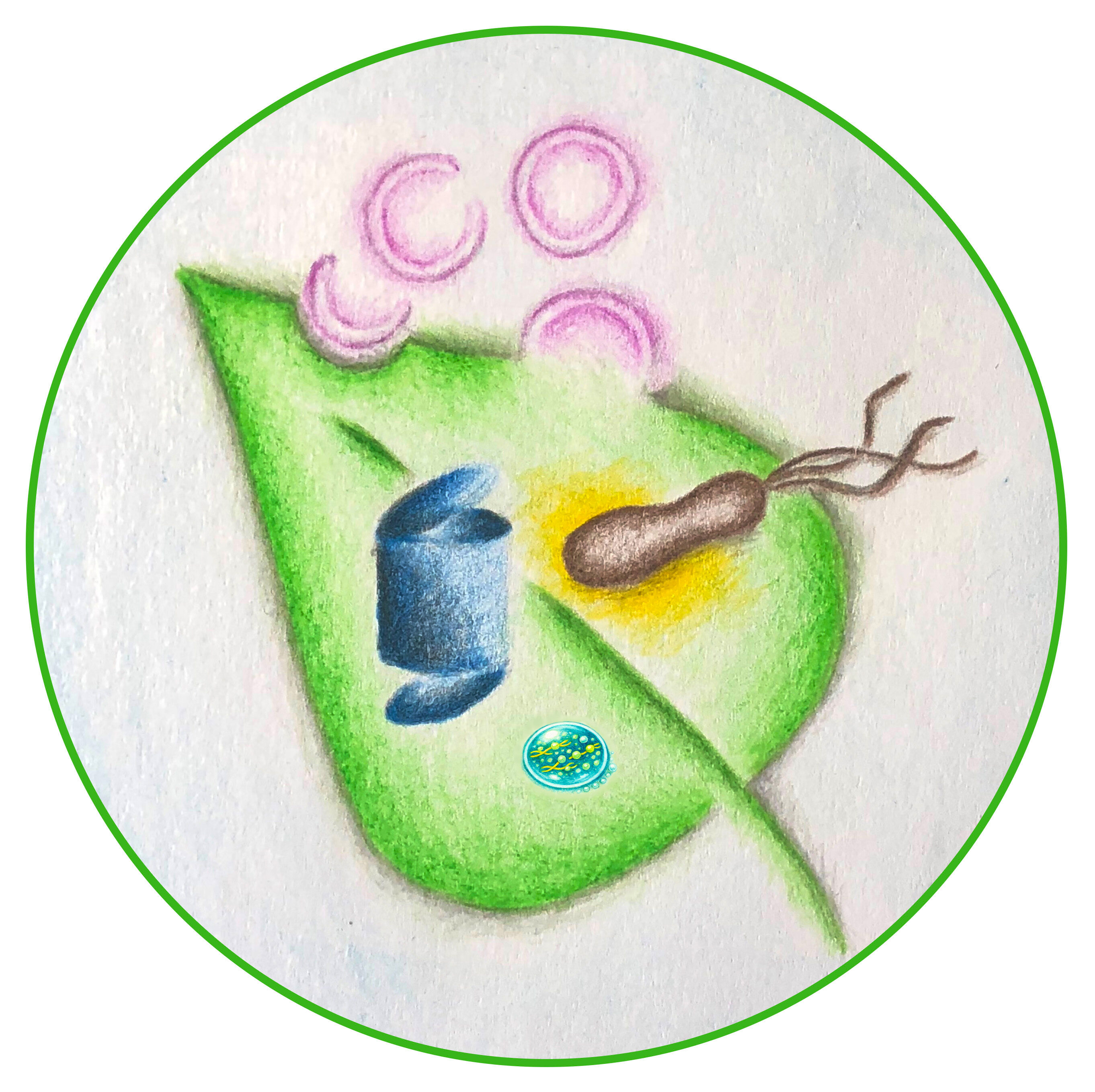
Our work points toward a new conceptual framework, where transcription factors like NAC53/78 orchestrate this balance, integrating environmental cues into coordinated cellular responses. And importantly, this mechanism may extend beyond plants.
The Long Road to Publication
We began writing the manuscript during a major transition, moving the entire lab at the end of 2022. In hindsight, we were overly optimistic about timelines. The move delayed us by nearly a year.
Eventually, we submitted to a top-tier journal. The reviews were mixed. Two reviewers were constructive, but one was highly critical and, in parts, misunderstood key aspects of our work. We basically lost a year.
It was a difficult phase.
We spent months strengthening the manuscript, especially the genetics, and refining the story. But persistence paid off. We submitted to Molecular Cell and after roughly a year of revision, the manuscript was accepted.
You can read it here:
https://www.cell.com/molecular-cell/fulltext/S1097-2765(26)00238-8
Beyond the Paper

During this intense period, Gautier reached several major milestones. He completed his PhD in Tübingen, advanced new research directions on proteasome evolution (stay tuned, something pretty cool is coming!) and moved to Vienna to join the Gross lab. Most impressively, he secured his own Marie Curie Fellowship!
What Stays
Looking back, what stands out most is not just the science, but the journey. From a seemingly unexciting yeast two-hybrid hit to a conceptual framework linking proteostasis, stress, and transcriptional control. From doubt and skepticism to validation. From a “small project” to a multi-year effort culminating in a major publication.
And above all, seeing a young scientist grow, developing independence, creativity, and confidence, is perhaps the most rewarding part of this profession.
If there is one lesson from this story, it is this: sometimes the most unexpected findings are the ones worth following the longest.
